AC vs. DC V2L: The Complete Technical Guide for EVSE Distributors and B2B Buyers

Table of Content [Hide]

    blog_banner.png


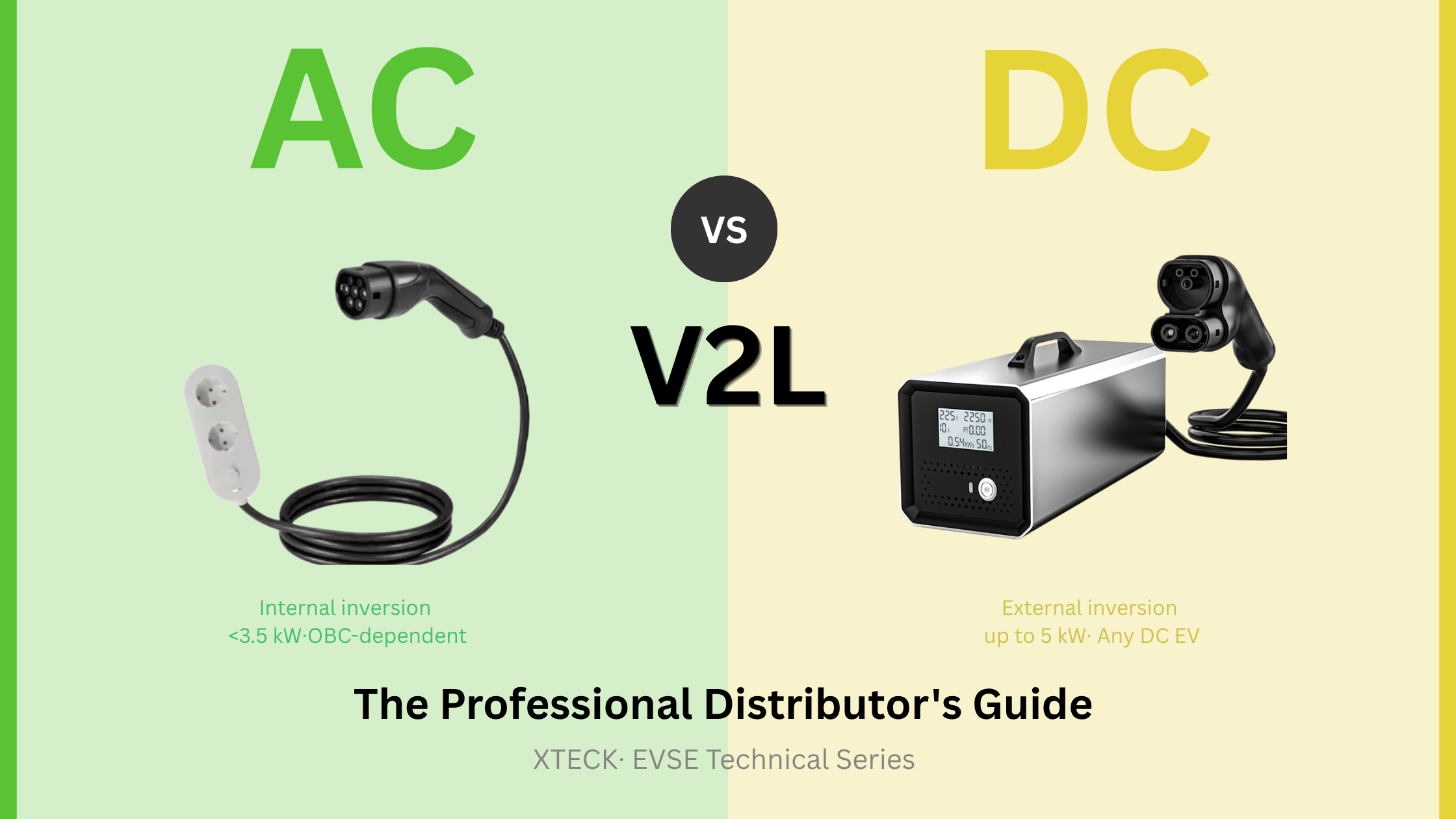
    If you're building a V2L product line for your market, the architecture you stock determines what you can and can't promise your customers. This guide walks through the technical and commercial differences between AC and DC V2L — so you can match the right SKU to the right market before you commit inventory.

    Two fundamentally different technical architectures sit behind the term "V2L." They serve different customers, different markets, and different grid realities.

    This guide walks through how each system works at the component level, which connector standards apply in which regions, where each solution wins commercially, and how to structure your inventory accordingly — whether you serve a single market or a multi-country distribution territory.


    1. What Is V2L? A Baseline for B2B Buyers


    V2L(后插图).jpg


    1.1 The Core Concept

    Vehicle-to-Load (V2L) is the capability to use an electric vehicle's traction battery as a portable AC power source for external electrical loads — appliances, tools, lighting, and industrial equipment. It is an energy export function, not a charging function.

    Three terms are frequently conflated in this space:

    Term

    Direction

    Scale

    V2L (Vehicle-to-Load)

    EV → external device or appliance

    Portable, low-to-mid power

    V2V(Vehicle-to-Vehicle)

    EV → another EV

    Peer-to-peer emergency charging

    V2H (Vehicle-to-Home)

    EV → home electrical panel

    Fixed installation, whole-home

    V2G (Vehicle-to-Grid)

    EV → utility grid

    Grid-scale, bidirectional


    For a full breakdown of V2L vs. V2H vs. V2G, see our primer: [What Is V2L? Understanding Vehicle-to-Everything Technology]


    1.2 Why V2L Is Becoming a Distribution Priority


    electric-vehicle-charging-infrastructure-market-overview-1758097042_副本.jpg


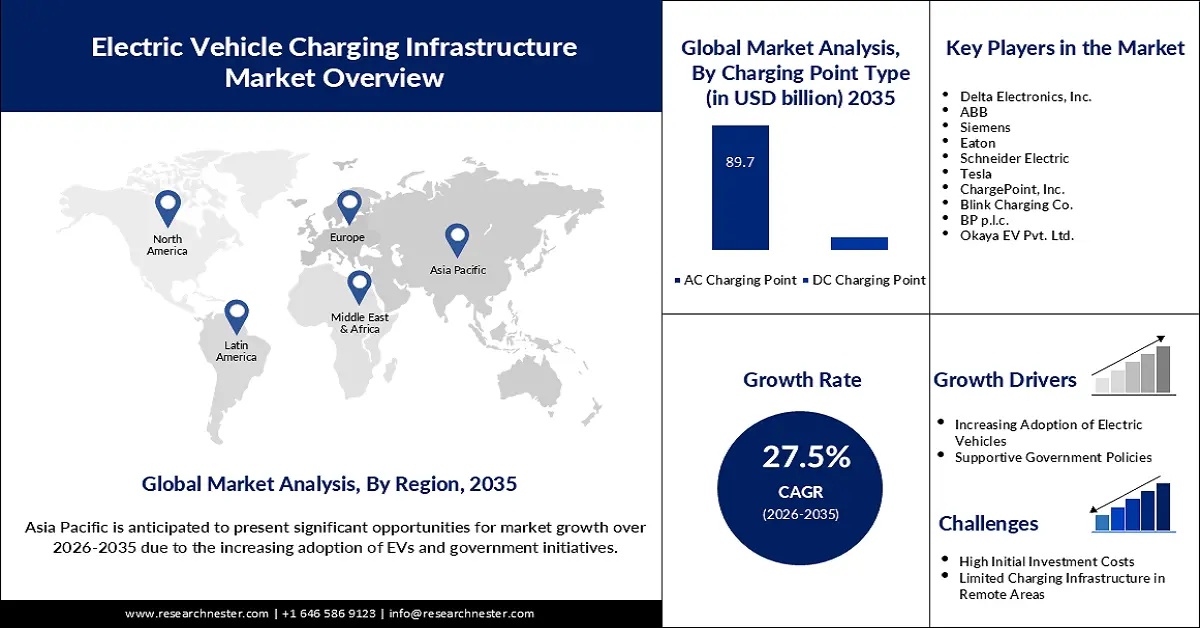
    Three converging factors are elevating V2L from a niche feature to a mainstream product category:

    EV penetration. As electric vehicles reach meaningful market share across Europe, Southeast Asia, and Africa, the installed base of mobile battery capacity is growing. Distributors who move early into V2L accessories capture the aftermarket before it commoditizes.

    Grid unreliability as a purchase driver. In a growing number of markets, buyers are not purchasing V2L for camping or convenience — they are purchasing it because their grid cannot be relied upon. This transforms V2L from a lifestyle accessory into a utility product, which changes both the buyer profile and the acceptable price point.

    Non-passenger-vehicle applications. The addressable market for V2L extends beyond consumer EVs. Electric sweepers, autonomous cleaning robots, agricultural EVs, and construction vehicles fitted with standard DC charging ports (CCS1, CCS2, CHAdeMO, GB/T) can all serve as power sources via an external DC V2L discharger — delivering on-site AC power wherever fixed grid access is unavailable. This opens a B2B channel that bypasses automotive retail entirely, reaching fleet operators, equipment rental companies, and industrial distributors.


    2. The Technical Divergence: AC V2L vs. DC V2L

    2.1 AC V2L — How It Works (Internal Inversion)


    ac.jpg


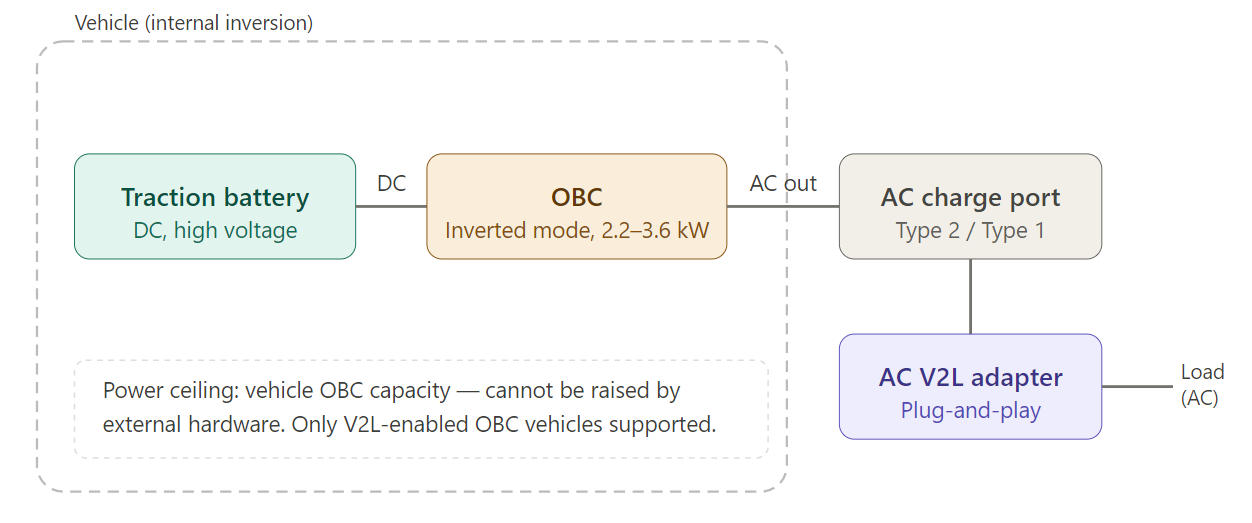
    In an AC V2L system, power conversion happens inside the vehicle:

    Power path: Traction battery (DC) → On-Board Charger (OBC) → AC output at the vehicle's charging port → external load

    The OBC — designed primarily to convert grid AC into DC for charging — operates in reverse to produce AC output. This means:


    ·Power ceiling is vehicle-defined. The output is capped by the OBC's inverter capacity, typically 2.2–3.6kW. No external hardware can raise this limit.

    ·Vehicle compatibility is restricted. AC V2L only functions on vehicles with a V2L-enabled OBC. Current examples include the Hyundai Ioniq 5, Ioniq 6, and Kia EV6. The majority of EVs on the market do not support this feature natively.

    ·Use profile. The 3.5kW ceiling suits low-to-medium power loads: consumer electronics, LED lighting, small appliances, fans, and basic medical equipment.


    On use cases: AC V2L is commonly associated with camping, but this framing understates the market. In regions where grid failures are frequent but short — rolling blackouts of two to six hours — an AC V2L adapter provides meaningful backup capacity for households and small businesses without requiring any fixed installation.


    2.2 DC V2L — How It Works (External Inversion)


    dc.jpg


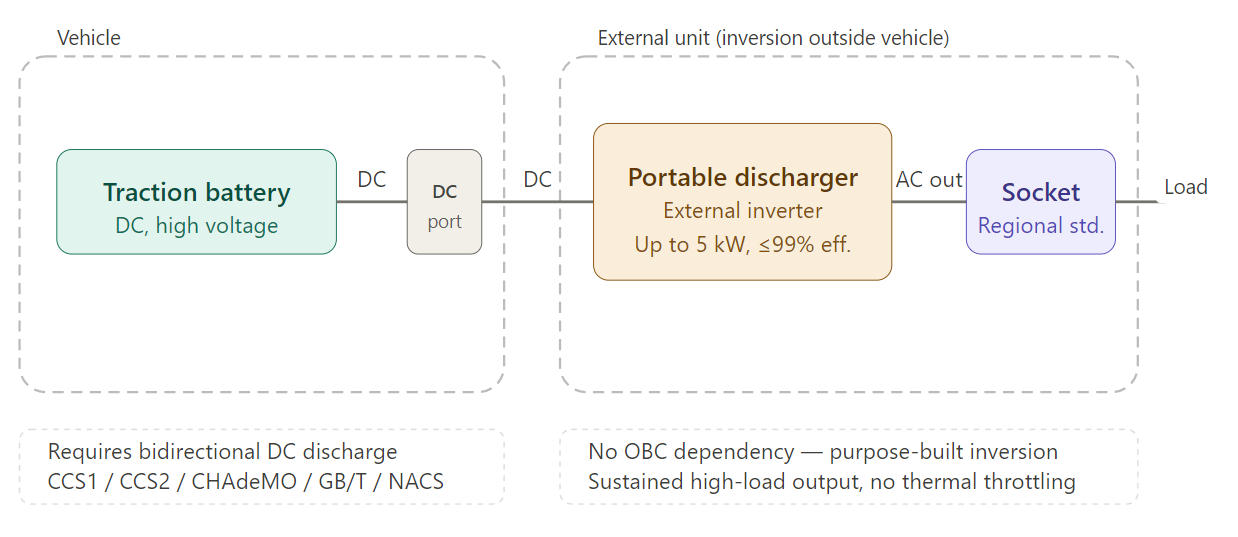
    In a DC V2L system, power conversion happens outside the vehicle:

    Power path: Traction battery (DC) → DC fast charging port → external portable discharger (contains inverter) → AC output → external load

    Because the inversion step is handled by a dedicated external unit rather than the vehicle's OBC, several constraints are removed:

    · Power ceiling is hardware-defined. The external discharger can be engineered to 3.5kW or 5kW regardless of what vehicle it connects to.

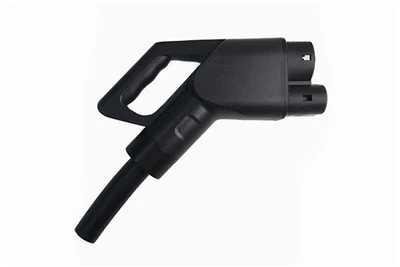
    · No OBC dependency. Compatible with any EV that supports bidirectional DC discharge via CCS1, CCS2, CHAdeMO, GB/T, or NACS — a capability present in a growing number of current-generation EVs and the majority of commercial electric vehicles. This covers the overwhelming majority of EVs in operation globally.

    · Higher efficiency. A purpose-built external inverter operating at its design point achieves up to 99% DC-to-AC conversion efficiency, compared to the variable efficiency of an OBC operating in an inverted, non-primary mode.

    · High-load continuous operation. Purpose-built external inversion supports sustained output up to 5kW — without thermal throttling under heavy or near-peak loads.


     2.3 Side-by-Side Technical Comparison

    Feature

    AC V2L Adapter

    DC V2L Discharger

    Inversion location

    Inside vehicle (OBC)

    External hardware unit

    Power output

    Up to 3.5kW

    3.5kW – 5kW

    Efficiency

    Dependent on vehicle OBC

    Up to 99%

    Vehicle dependency

    V2L-enabled OBC required

    Any EV with DC charge port

    Connector(input)

    Vehicle's AC charge port

    CCS1 / CCS2 / CHAdeMO /

    GB/T / NACS

    Load capacity

    Small appliances, lighting

    Heavy appliances, power tools

    Typical session

    2–6 hours

    Extended / continuous

    Form factor

    Compact plug adapter

    Standalone unit with display

    Installation

    Plug-and-play

    Plug-and-play

    (no fixed install)


    3. Connector Standards — What Your Market Requires

    3.1 Input Connectors — By Product Type

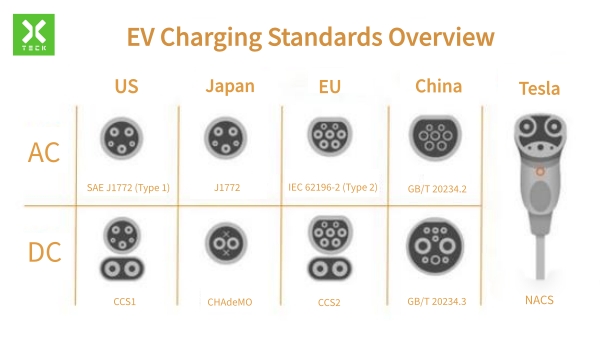
    The input connector determines which vehicles your customers can use as a power source. Specifying the wrong variant means incompatible inventory — get this right before committing to an order.


    未命名_副本.jpg


    3.2 Output Sockets — Regional Standards


    11_格式_(2).png


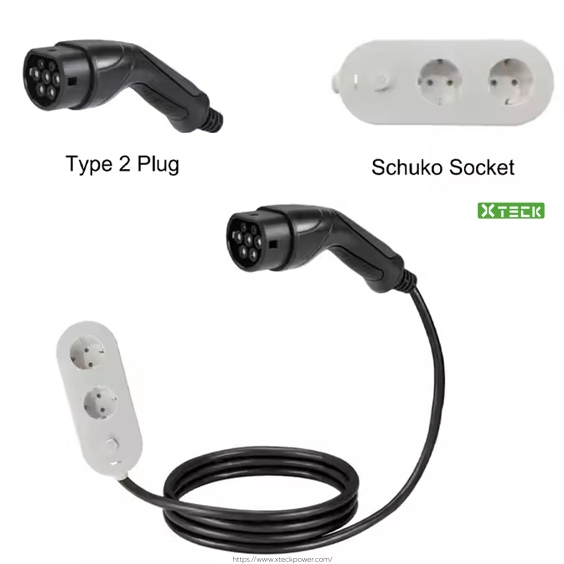
    Both AC and DC V2L products deliver power through a standard regional

    wall socket. Socket type must match your target market:

    Socket Type

    Standard

    Key Markets

    Universal Socket

    Multi-region compatible

    Global / mixed markets

    EU Standard

    Schuko Type F

    Continental Europe, parts of Middle East & Africa

    UK Standard

    BS1363 Type G

    UK, Ireland, Hong Kong, Gulf states

    US Standard

    NEMA 5-15 Type B

    North America, Japan

    > Specify output socket configuration at order stage.


    4.  Matching the Right Product to Your Customer

    Your end customers fall into two distinct buyer profiles.

    Knowing which one dominates your market determines which SKU to lead with.


    4.1 The Lifestyle Buyer → AC V2L Adapter

    Who they are: EV owners who want energy flexibility for outdoor use, occasional outages, or peace of mind. Purchase decision is emotional and convenience-driven. Price sensitivity is moderate.

    What they need: A compact, plug-and-play solution that works immediately — no setup, no technical knowledge required.


    Where this buyer is concentrated: Markets with high EV penetration, strong outdoor recreation culture, or frequent but short-duration grid interruptions (a few hours at a time).


    Your margin opportunity: High attach rate when bundled with vehicle delivery. OEM and private-label options available — strong candidate for branded accessory programs.


    4.2 The Resilience Buyer → DC V2L Discharger

    Who they are: EV owners or operators in markets where power interruptions are long, frequent, or structurally built into daily life. Purchase decision is rational and utility-driven. They are comparing this product against a diesel generator — not against an AC adapter.


    What they need: Sustained high-power output (5kW), broad vehicle compatibility, and reliability under continuous load. The fact that it produces no noise and no emissions is a secondary but real selling point.


    Where this buyer is concentrated: Markets with extended daily outages, unreliable grid infrastructure, or large off-grid industrial sectors (construction, agriculture, remote operations).


    Your margin opportunity: Higher unit price, lower volume — but lower return rate and stronger repeat B2B purchasing from fleet operators and industrial buyers. DC V2L sells on specification, not price.


    4.3 The Industrial Buyer → DC V2L Discharger

    Who they are:Fleet managers, equipment rental companies, construction contractors, and agricultural operators. They are not buying for personal backup — they are solving a site power problem. This buyer does not come through automotive retail.


    What they need: A reliable AC power source at remote sites where running grid cable is impractical and diesel logistics are costly. The source vehicle is an electric work truck, a cleaning robot, or an agricultural EV — not a passenger car.


    Your margin opportunity: Repeat procurement, volume orders, long-term supply relationships. This buyer evaluates on TCO (total cost of ownership) vs. diesel — a calculation that strongly

    favors the DC V2L discharger over a 3–5 year horizon.


    4.4 Which SKU to Lead With

    If your market has...

    Lead SKU

    Secondary SKU

    High EV penetration + stable grid

    AC V2L Adapter

    DC V2L Discharger

    Frequent short outages (2–8 hrs)

    AC V2L Adapter

    DC V2L Discharger

    Extended daily outages (8+ hrs)

    DC V2L Discharger

    AC V2L Adapter

    Large off-grid industrial sector

    DC V2L Discharger

    -

    Mixed market (multiple profiles)

    Both

    Segment by channel


    5. XTECK Product Specifications — Matched to Market Need

    5.1 XTECK AC V2L Adapter — Procurement Specifications


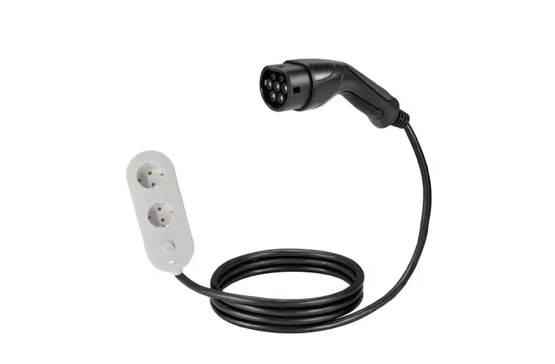
    type-2-vehicle-to-load-v2l-adapter-16a-3.5kw-ac-discharge-ev-charging-adapter-01_副本.jpg


    The XTECK AC V2L Adapter is designed for high-volume dealer and retail channel distribution. No installation required; plug-and-play at point of sale.

    Specification

    Detail

    Input connector

    Type 2 Female (EU standard); regional variants available

    Output

    Schuko socket (EU); regional output variants available

    Power rating

    3.5kW / 16A

    Voltage

    220–250V AC

    Protection grade

    IP54 (in coupled state)

    Operating temperature

    -30°C to +50°C

    Certification

    CE

    Customization

    Cable length, cable color, plug type — available for OEM and private label


    B2B positioning: High-volume entry-level SKU for dealerships and retailers. Low complexity, high attachment rate when sold alongside compatible vehicles. Customizable for private label alignment.

    [AC V2L Adapter]


    5.2 XTECK DC Portable V2L Discharger — Procurement Specifications


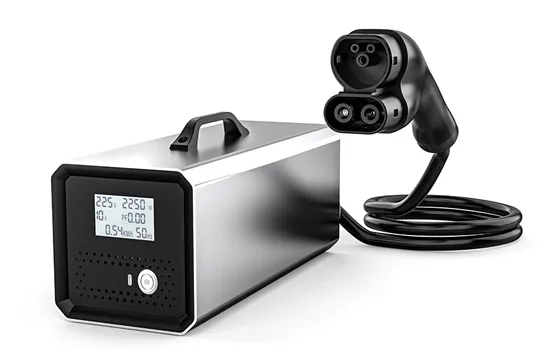
    H10e8e4b2731745b78f447748fffa5bdew_副本.jpg


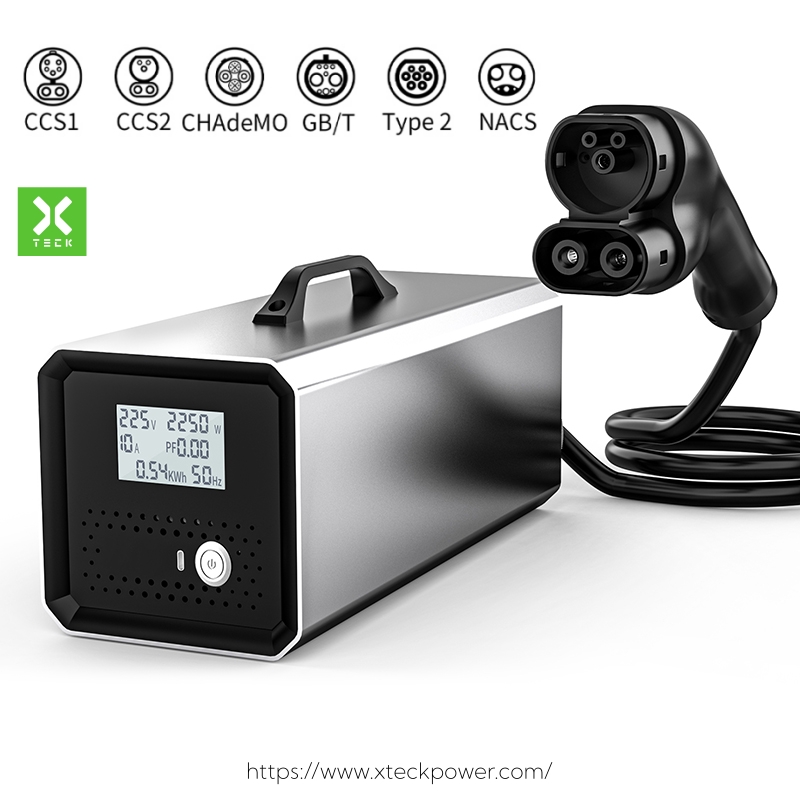
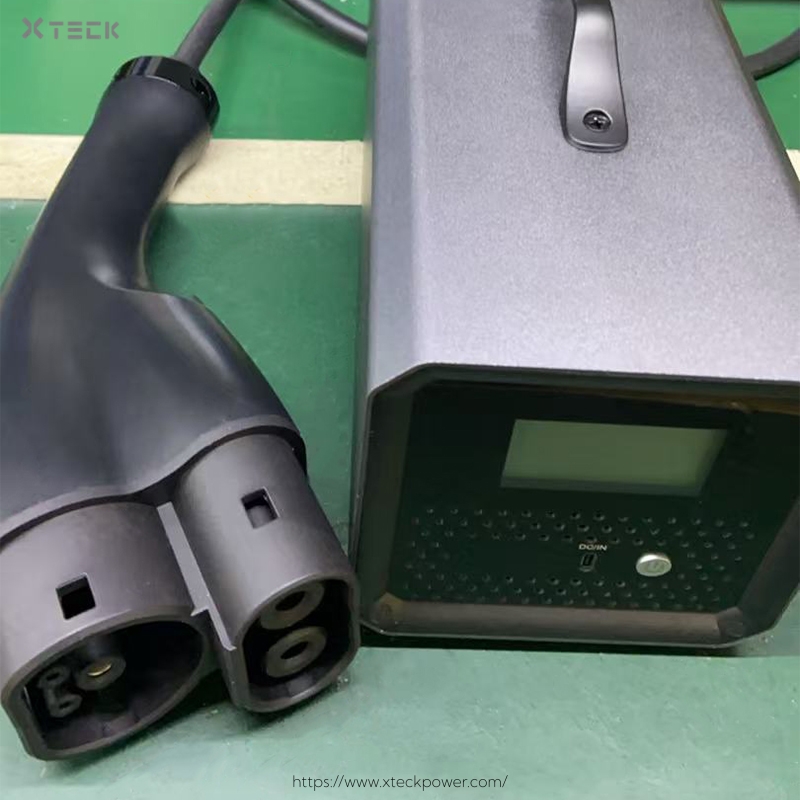
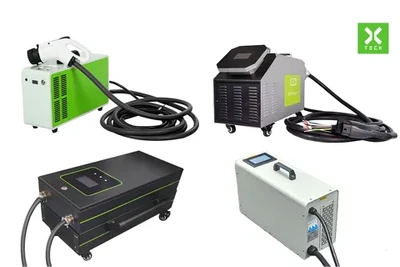
    The XTECK DC Portable V2L Discharger is a standalone external inverter for professional, industrial, and emergency backup applications. Vehicle-independent — compatible with any EV carrying a supported DC fast charge port.


    Specification

    Detail

    Input connectors

    CCS1, CCS2, CHAdeMO, GB/T, NACS(Tesla)

    DC input voltage

    Maximum 450V

    AC output

    Single-phase 220V ±6%, 50Hz / 60Hz

    Output sockets

    Dual 16A outlets

    Efficiency

    Up to 99%

    User interface

    5" display screen + remote control

    Power models

    3.5kW / 5kW


    B2B positioning: Premium SKU for professional and industrial channels. Strongest commercial case in markets with extended daily outages or off-grid site operations — Sub-Saharan Africa, Middle East, and conflic

    [ DC V2L Discharger]


    6 OEM and Private Label Considerations

    Both products support full private label and OEM customization. This is relevant if you are building a branded accessory line for a dealer network, aligning product presentation with an existing equipment brand, or entering a market where local branding increases sell-through.


    AC V2L Adapter

    DC V2L Discharger

    Cable length

    Configurable

    -

    Cable color

    Configurable

    -

    Output plug type

    Configurable

    Configurable

    Display language

    -

    Configurable

    External branding

    Available

    Available

    Suitable channel

    Dealer networks, retail chains

    Industrial, professional, fleet

    To initiate an OEM or private label inquiry, contact XTECK with: your target market, estimated annual volume, and preferred branding requirements. MOQ and lead times are confirmed at inquiry stage:Contact XTECK Directly


    FAQ


    V2L_DC.jpg


    Q: What is the difference between AC V2L and DC V2L for commercial distribution?

    A: AC V2L uses the vehicle's built-in charger (OBC) to produce AC output — limiting power to 3.5kW and restricting compatibility to specific V2L-enabled models. DC V2L uses an external inverter unit connected to the vehicle's DC fast charge port, raising output to 5kW, increasing efficiency to up to 99%, and making the product compatible with virtually any EV in operation. For distributors, DC V2L covers a broader customer base and commands a higher margin.

    Q: Which connector standard do I need for my market?

    A: For AC V2L adapters, Type 2 Female covers most European and Middle Eastern markets; Type 1 covers North American and Korean fleet. For DC V2L dischargers, CCS2 dominates Europe and emerging Southeast Asian markets; GB/T covers Chinese-brand EVs prevalent in Africa and Southeast Asia; CHAdeMO for legacy Japanese fleet; CCS1 for North America. If your territory has a mixed fleet, the DC discharger's multi-protocol design minimises connector fragmentation. Confirm specifications with XTECK before placing orders.

    Q: Can a DC V2L discharger replace a diesel generator on a construction site?

    A: For sites with access to an EV with a compatible DC fast charge port, yes — in terms of power output (up to 5kW continuous), operational duration (limited by the EV's battery capacity), and load compatibility (tools, lighting, small HVAC). The DC discharger produces no emissions and no noise, and requires no fuel logistics. For sites with no EV access, a conventional generator remains necessary. The stronger commercial case is for electric construction and agricultural vehicles already equipped with CCS or GB/T ports.

    Q: What certifications does the XTECK DC V2L Discharger carry?

    A: CE certification is standard. Additional regional certifications are available depending on target market — contact XTECK to confirm requirements for your territory before importing.

    Q: What output socket types are available, and can they be specified per order?

    A: Both products are available with regional output socket configurations: Schuko (Type F) for continental Europe, BS1363 (Type G) for UK and Gulf markets, NEMA 5-15 for North America, and a universal socket for mixed-market applications. Output socket type is specified at order stage.

    Q: What should I have ready before contacting XTECK for a wholesale quote?

    A: To get an accurate quote and connector recommendation, have the following ready: your target market(s) and dominant EV fleet connector standard; estimated annual volume; whether you need OEM/private label; and any regional certification requirements for import. This lets XTECK's technical sales team give you a precise specification on the first call.


    Conclusion

    AC and DC V2L are not competing products — they address different customer needs at different price and performance points.

    The AC V2L Adapter is an accessible, high-volume product for markets where outages are short, vehicle compatibility is specific, and the buyer profile is consumer or prosumer. Its value is simplicity: one cable, no infrastructure, compatible with the growing installed base of V2L-enabled EVs.

    The DC V2L Discharger is a professional-grade tool for markets where grid reliability has structurally deteriorated, where power demand exceeds what an OBC can supply, or where no grid access exists at all.

    Global grid instability is not a temporary condition. The markets described in this guide — South Africa, Ukraine, Southeast Asia, MENA, Sub-Saharan Africa, Latin America — are not outliers. They represent a growing share of the world's EV buyers, purchasing EVs partly because of the energy flexibility those vehicles enable.

    If you're mapping your V2L product line, the buyer profiles in Section 4 are a practical starting point. For connector specifications, OEM options, or wholesale pricing, contact XTECK's technical sales team directly.


    Ready to Match the Right V2L Solution to Your Market?

    Ready to specify?

    [Tell us your market and target fleet — we'll recommend the right connector variant →]

    Ready to order?

    [Request a wholesale quote →]


    References

    Related EV Charger

    Related XTECK EV Charging News

    Products
    Get in Touch. Contact an EVSE Representative Today
    Our team will get back to you as soon as possible within 24 hours.
    Contact Us

    XTECK is a premier electric vehicle charging station manufacturer.


    Add
    No.1799, songhui Rd(w), Songjiang District, Shanghai, China, 201600
    Contact Us