Successful charger deployment depends on much more than whether the hardware can establish a connection with the backend platform. Before a charging point is opened to drivers, operators need to confirm that authorization, transaction handling, status reporting, remote control, fault recovery, and data synchronisation all behave consistently under real operating conditions.
This becomes especially important when an OCPP EV chargeris connected to a third-party Charging Station Management System or introduced into a network that already contains equipment from other manufacturers. Even when both sides support the same protocol version, differences in configuration, optional functions, offline behaviour, diagnostics, and transaction processing can still affect day-to-day operation.
For this reason, compatibility testing for an OCPP charging station should reproduce the situations the charger is likely to encounter after deployment rather than stopping at a successful backend connection. The most useful validation process focuses on how the complete system behaves before, during, and after a charging session.
Charger and CSMS Communication Across Different OCPP Implementations
OCPP provides a standard communication framework between charging stations and a Charging Station Management System, but supporting OCPP does not automatically mean that every charger will behave identically with every backend.
The protocol version is the first point to confirm. Different OCPP versions use different message structures and support different capabilities for transaction management, device monitoring, security, smart charging, and other functions. The charger and CSMS therefore need to support a compatible implementation before detailed integration work begins.
Even when both systems use the same OCPP version, configuration differences can still affect communication. The charger must have the correct backend address, charging-point identity, security settings, network parameters, and required credentials. At the same time, the CSMS must correctly recognise the station and interpret the messages it sends.
For this reason, operators should not treat an online status indicator as proof of full compatibility. An OCPP EV charger should be checked through its complete operating sequence, including startup registration, connector status updates, authorization, charging transactions, meter data, fault messages, and remote commands.
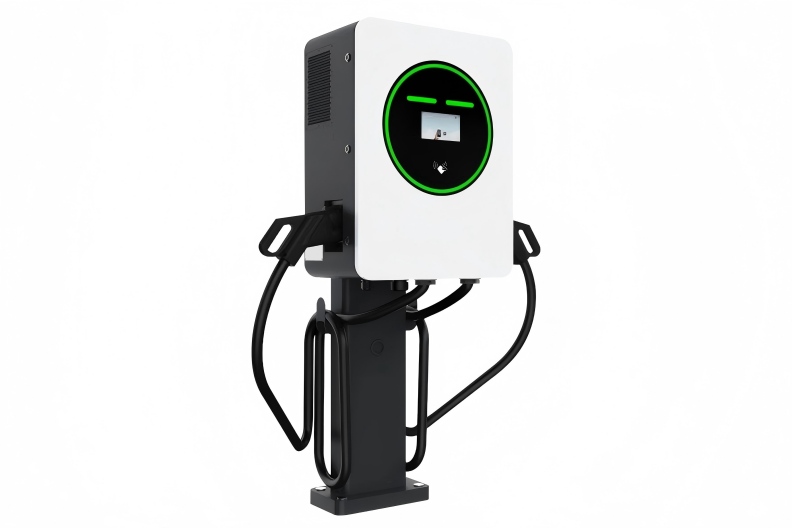
For projects where communication requirements need to be considered together with charger hardware, XTECK Power's EV charging products and OCPP-capable charger configurations provide a useful reference for evaluating how communication functions, charging interfaces, power architecture, and installation requirements fit into one complete system.
Functions That Need Verification Before the Charger Goes Live
Commissioning should cover the functions that will directly affect drivers, operators, billing systems, and maintenance teams. A charger that passes a basic connectivity test can still produce operational problems if individual functions have not been verified against the intended CSMS.
The process should begin with startup behaviour. After the charger is powered on, the backend should recognise the correct station identity and receive an accurate representation of its status. Connector availability displayed in the CSMS should match the actual condition of the charger.
User authorization is another important area. If the project uses RFID cards, apps, accounts, QR-based workflows, or another supported access method, the complete authorization path should be tested. This includes how a valid user is accepted, how an invalid request is rejected, and what information is recorded when a session begins.
Charging transactions should then be checked from start to finish. Energy data, timestamps, transaction identifiers, connector information, and stop reasons need to be transferred in a form that the backend can process consistently. These records become especially important when an OCPP charging station is connected to billing, fleet management, reimbursement, or operational reporting systems.
Fault reporting should also be tested deliberately. The CSMS should be able to distinguish between normal status changes and conditions that require operator attention. Operators should confirm that the charger reports faults clearly and returns to the correct state after the issue has been resolved.
Compatibility Area
What Should Be Verified
Risk if Not Tested
Initial connection
Station identity, backend connection, startup registration and status reporting
The charger may appear offline or be incorrectly identified
User authorization
RFID, app, account, or other access method and authorization response
Valid users may be rejected or access rules may be applied incorrectly
Charging transactions
Session start, stop, timestamps, energy data and transaction records
Incomplete operating or billing information
Network interruption
Offline behaviour, reconnection and pending-data synchronisation
Lost, delayed, or duplicated session data
Remote operation
Remote start or stop, reset, configuration and diagnostics where supported
Operators may be unable to manage chargers reliably from the backend
Fault recovery
Error reporting, status update and return to normal operation
The CSMS may continue showing an incorrect charger state
Network Loss, Reconnection, and Offline Session Handling
Real charging networks do not operate with perfect connectivity at all times. Ethernet links, routers, mobile networks, site infrastructure, and cloud platforms can all experience temporary interruptions. How the charger behaves during these periods should therefore be defined and tested before deployment.
One of the first questions is whether charging can continue while communication with the CSMS is unavailable. The answer depends on project policy, charger configuration, and the functions supported by the selected implementation. Some sites may allow appropriate locally authorised sessions, while others may require live backend approval.
If a charging session continues while the network is unavailable, the charger also needs to preserve relevant transaction information until connectivity returns. An OCPP EV charger should be able to maintain the data required to reconstruct the session and then send it to the backend in a consistent sequence.
Reconnection behaviour is equally important. When communication is restored, the charger should return to the correct operating state without duplicating transactions, losing active-session information, or leaving the CSMS with outdated connector status.
Testing should therefore include both short interruptions and longer outages. A system may recover correctly from a brief disconnection but behave differently when it remains offline for an extended period. This is particularly important for an OCPP charging station deployed in areas that depend on cellular connectivity or where network quality varies throughout the day.
Authentication, Billing Data, and Charging Session Synchronisation
Authentication connects a physical charging event with a user or account, while transaction data connects that event with the commercial systems behind the charging network. If either side becomes inconsistent, energy may still be delivered even though the business record for the session is incomplete.
When a driver presents an RFID card or uses another supported authorization method, the charger and CSMS must agree on whether that user is permitted to charge. Operators should also understand what happens when authorization information has changed, expired, or cannot be checked because the backend is temporarily unavailable.
Once charging begins, the charger generates operational data that can be used to create the session record. The CSMS may then associate the information with a driver, account, connector, location, and transaction. For commercial OCPP charging station networks, consistency is important because these records may later be used for billing, fleet allocation, reimbursement, or energy analysis.
Testing should include more than a normal start-and-stop sequence. Vehicle disconnection, remote stops, user stops, network interruptions, charger faults, and unexpected session endings can all affect how transaction data is generated and synchronised.
Timestamp handling should also be checked carefully. Events generated by the charger and events processed by the backend need to remain in a logical order. This becomes especially important when operators need to investigate a disputed session or compare records across multiple charging sites.
Remote Commands and Diagnostics During Routine Operation
One of the main operational benefits of connecting chargers to a CSMS is the ability to manage equipment remotely. However, the required commands should be tested against the actual charger and backend before operators depend on them in daily service.
Depending on the OCPP version and implementation, remote functions can include starting or stopping a charging session, resetting the charger, updating selected configuration values, retrieving status information, and obtaining diagnostic data. Firmware-related functions may also be available where supported.
The important point is not simply whether a command exists in the backend interface. Operators need to know how the OCPP EV charger responds when the command is accepted, rejected, delayed, or cannot be completed.
This is particularly important when a charger is already in use. A remote reset or configuration change should not create unexpected behaviour during an active session, while an unsuccessful remote command should generate a clear response that allows the operator to understand what happened.
Remote diagnostics can also reduce unnecessary site visits. When the backend provides clear fault information and charger status, maintenance teams can often determine whether an issue relates to communication, authorization, charging hardware, or another operating condition before sending a technician to the location.
These functions should also be checked after temporary network loss. Commands generated while an OCPP charging station is unreachable should not produce unexpected actions later simply because connectivity has returned. How delayed, expired, or unsuccessful requests are handled should therefore be part of the commissioning process.
Multi-Brand Deployment and Expansion of the Charging Network
One of the reasons operators adopt OCPP is to reduce dependence on a single proprietary charger-backend combination. A common communication protocol can make it easier to integrate chargers from different manufacturers into one management environment, but multi-brand deployment still requires structured compatibility testing.
Two charger models may support the same OCPP version while implementing optional functions differently. They may also expose different diagnostic information, configuration parameters, firmware workflows, authentication behaviour, or smart-charging capabilities.
For this reason, network operators should define the functions that every new charger must support before adding it to the platform. Instead of asking only whether a product is an OCPP EV charger, they should confirm whether it supports the authentication methods, transaction logic, remote operations, monitoring functions, security requirements, and maintenance workflows needed by the network.
A consistent test process also makes expansion easier. New charger models can be evaluated against the same operating scenarios already used for existing equipment. This helps separate genuine protocol compatibility issues from problems caused by network settings, hardware configuration, firmware, or backend-specific requirements.
Multi-brand planning is particularly important when a network is expected to expand over several stages. An OCPP charging station that works correctly in a small pilot should also be evaluated for how it will behave when the backend is managing many more chargers, locations, users, and simultaneous transactions.
For projects where charger hardware needs to be matched with a specific CSMS, communication method, authentication process, or operating workflow, XTECK Power can review these requirements through its OCPP EV charger integration and project consultation, allowing compatibility requirements to be addressed before larger-scale deployment begins.
Conclusion
OCPP compatibility should be treated as an operational requirement rather than a simple protocol label. Reliable deployment depends on how the charger and CSMS communicate during startup, authorization, active charging, transaction completion, network interruptions, fault recovery, remote management, and ongoing maintenance.
For this reason, an OCPP EV charger should be tested with the actual backend and operating workflow before wider rollout. A successful connection or one completed charging session does not demonstrate how the system will behave when communication is interrupted, a remote command fails, or a transaction ends unexpectedly.
The same principle becomes even more important as charging networks expand. A well-integrated OCPP charging station should provide predictable behaviour across different sites, backend conditions, and operating scenarios, giving network operators greater flexibility to add new chargers without sacrificing day-to-day reliability.
Frequently Asked Questions
1. What does OCPP compatibility mean for an EV charger?
OCPP compatibility means the charger supports an Open Charge Point Protocol implementation for communication with a CSMS. Actual deployment compatibility should still be tested because protocol versions, supported functions, configuration, and backend behaviour may differ.
2. Can any OCPP EV charger connect to any OCPP backend?
Not automatically. The charger and CSMS need compatible protocol versions and must support the functions required by the project. Authentication, transactions, security settings, remote commands, and other workflows should be verified before deployment.
3. What happens to an OCPP charging station when the network connection is lost?
Behaviour depends on the charger configuration and implementation. Some chargers can continue appropriate sessions or support local authorization, while transaction data may be stored and synchronised after connectivity is restored.
4. Why should offline transaction recovery be tested?
Testing confirms that charging records are not lost, duplicated, or incorrectly ordered after the network disconnects and reconnects. It also verifies that the charger and backend return to a consistent session state.
5. Can an OCPP EV charger be managed remotely?
Yes. Depending on the OCPP version and charger implementation, remote functions may include session control, charger reset, configuration, diagnostics, and firmware-related operations. Required functions should be tested with the intended CSMS.
6. Is OCPP useful for charging networks with different charger brands?
Yes. OCPP can make multi-vendor charging networks easier to manage through a common communication framework. However, each charger model should still be validated against the CSMS and the operator's required functions before large-scale rollout.
Can I Charge My Chinese EV on a CCS2 Charger?August 21, 2025Yes, you can — but only with a CCS2 to GBT adapter. Here's how to use it safely at home or office. Why Chinese EVs Don't Fit on CCS2 ChargersIf you've bought a Chinese EV like BYD, XPeng...view